Description
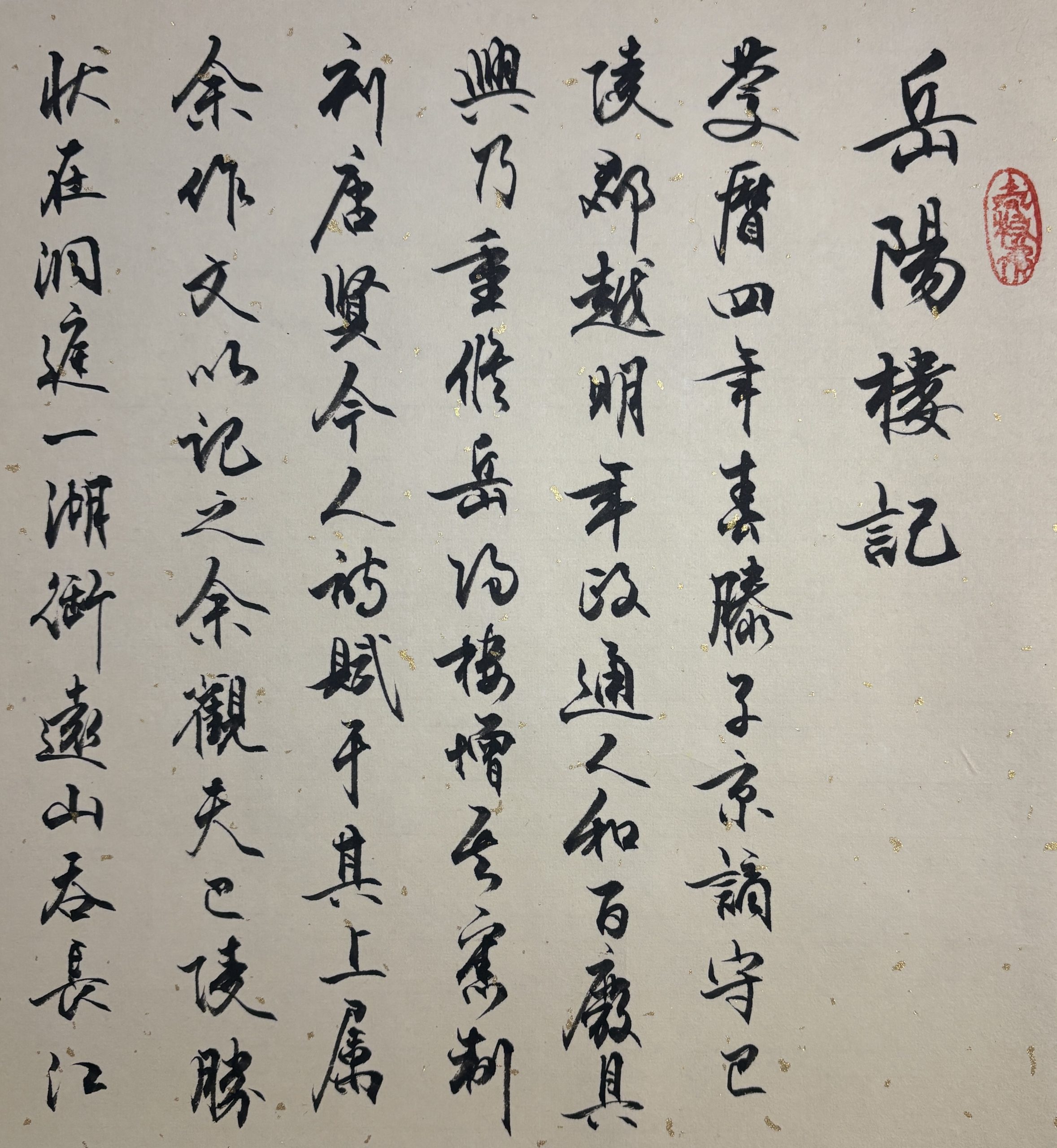
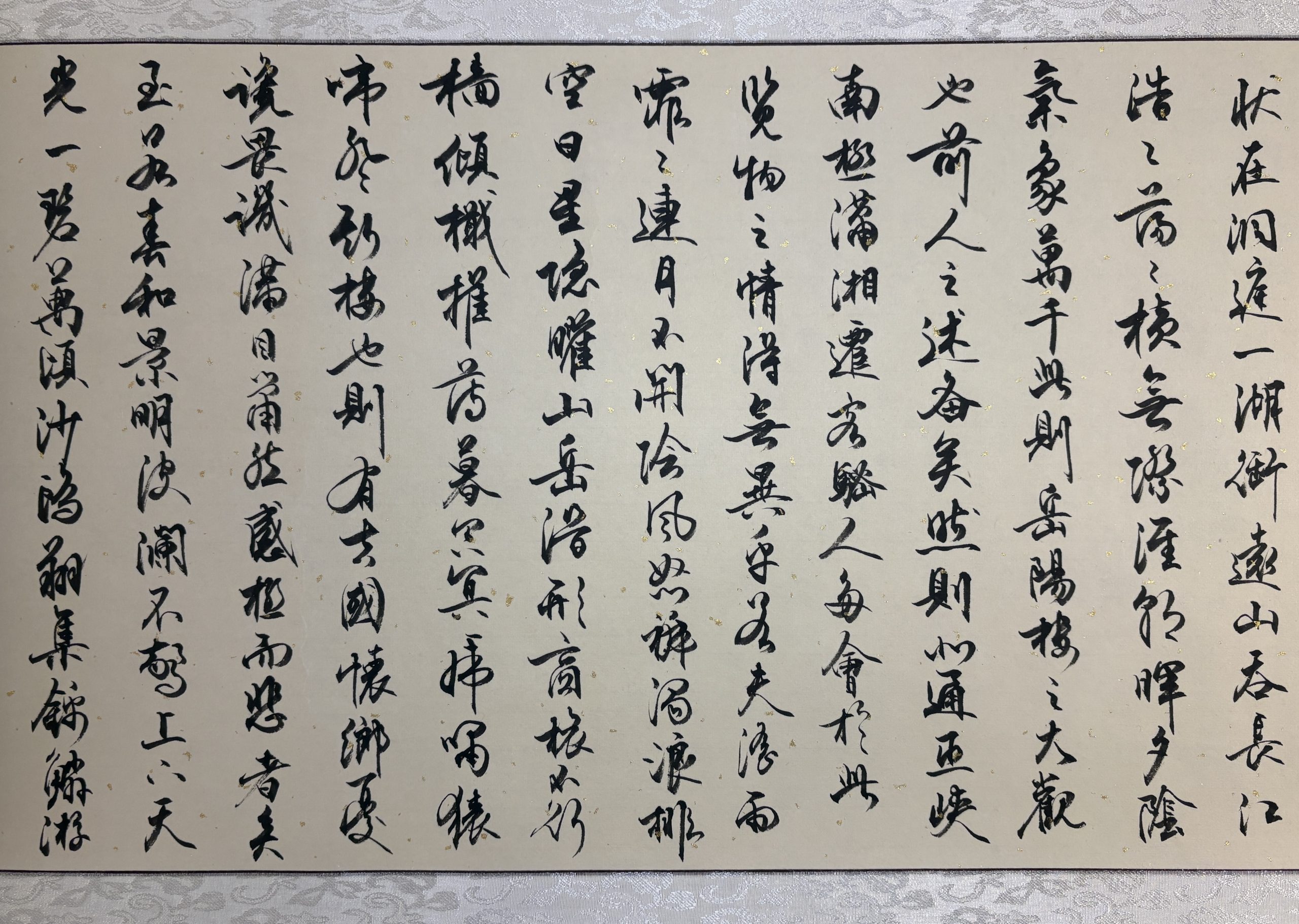
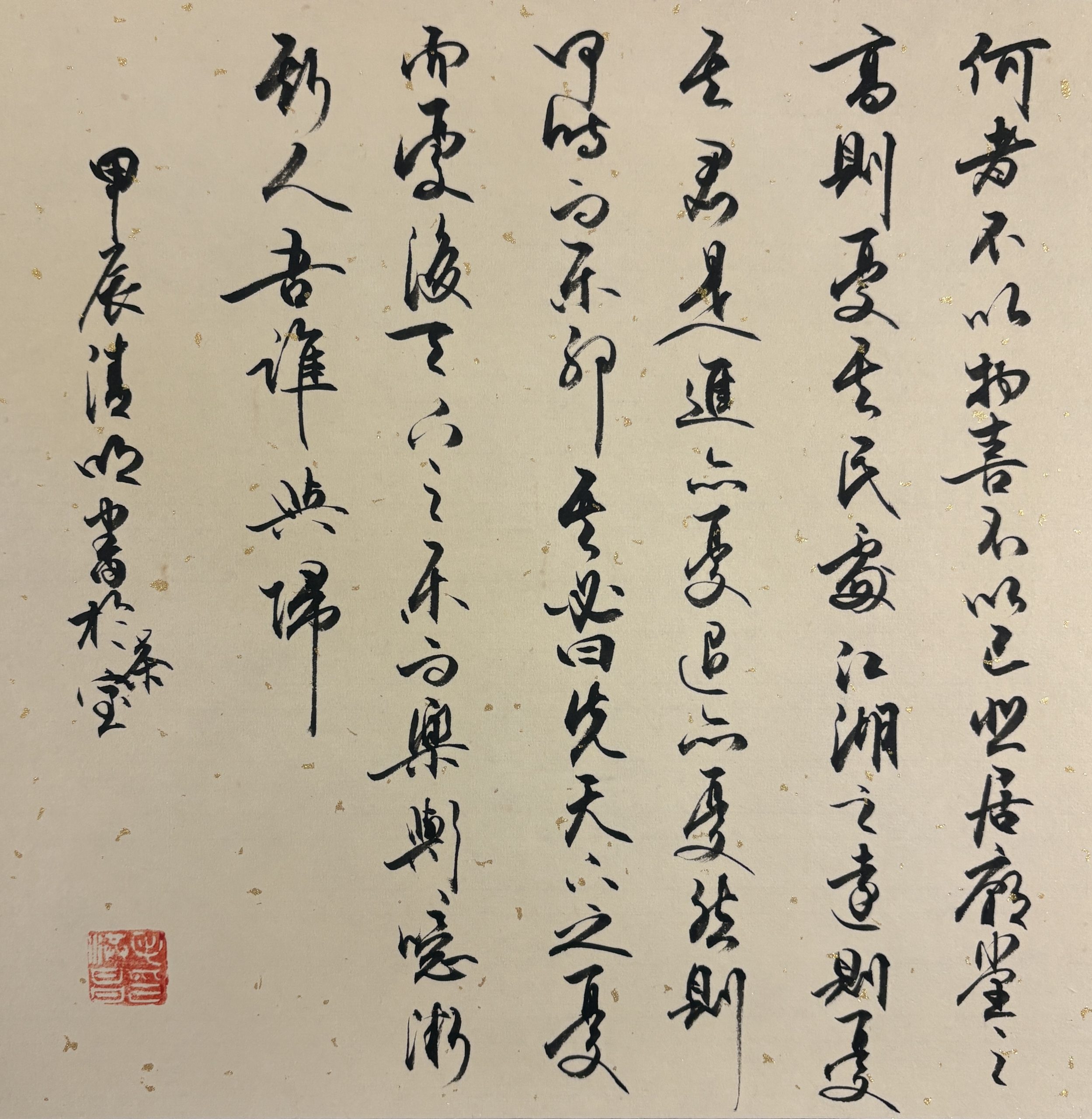
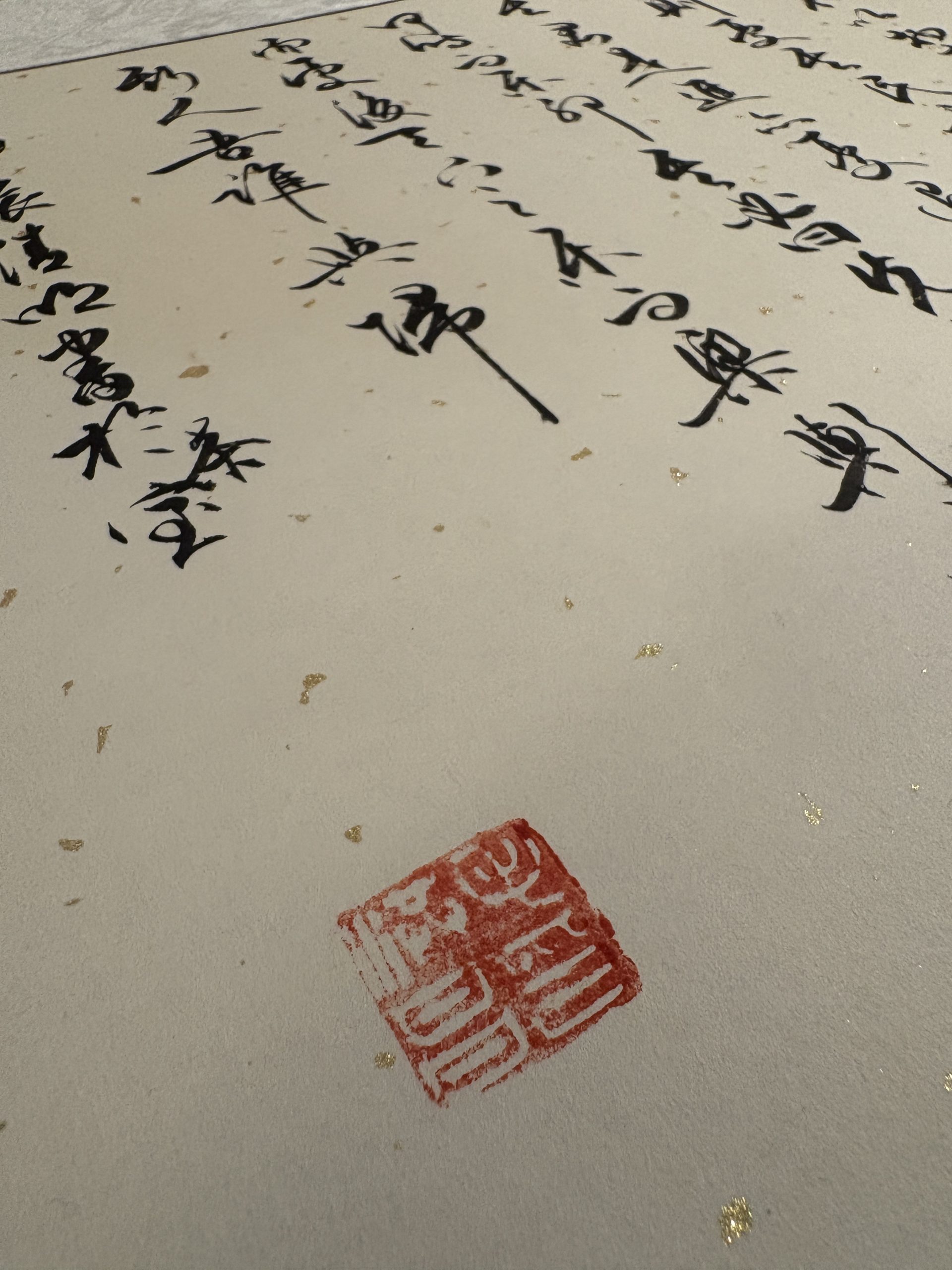
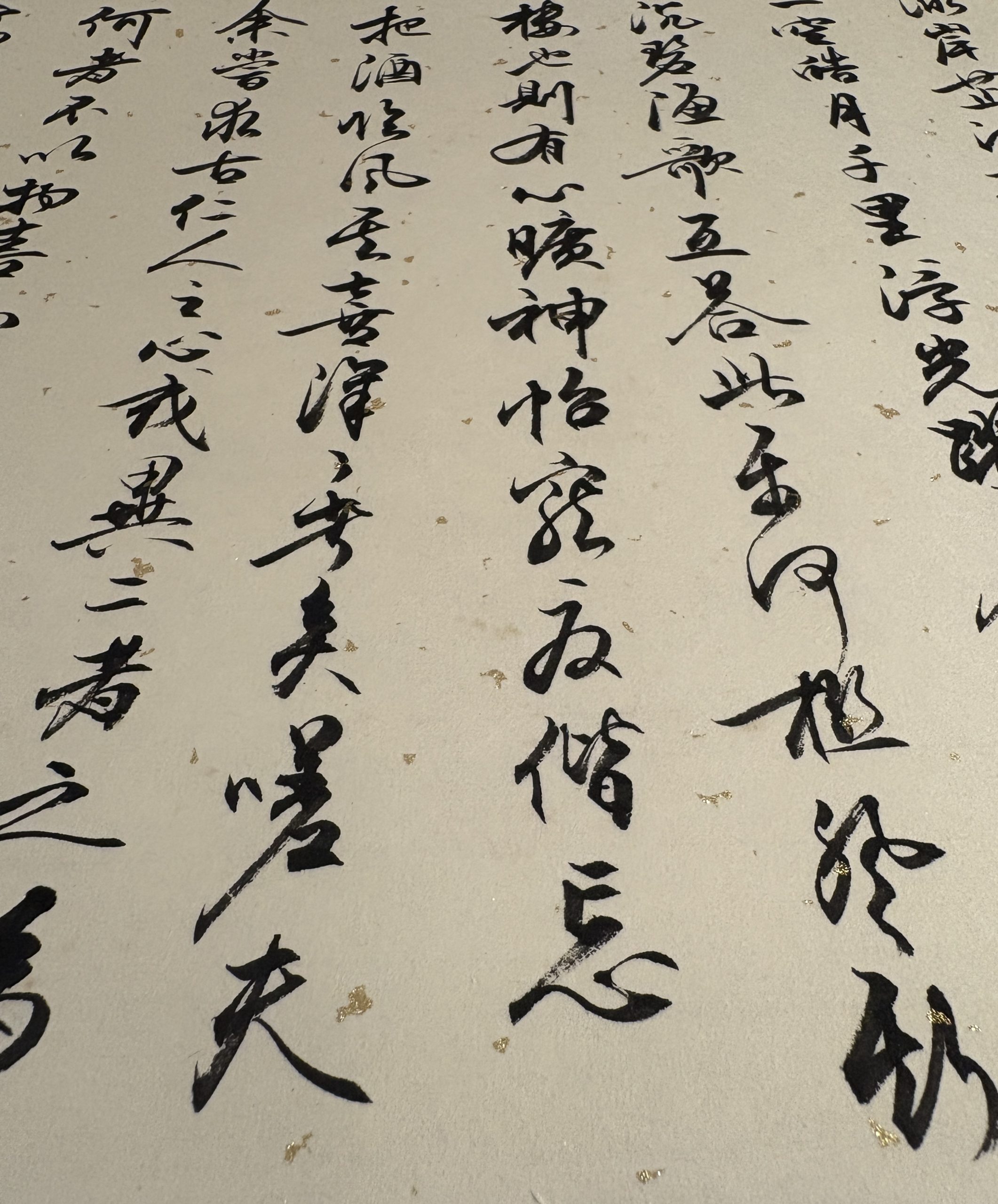
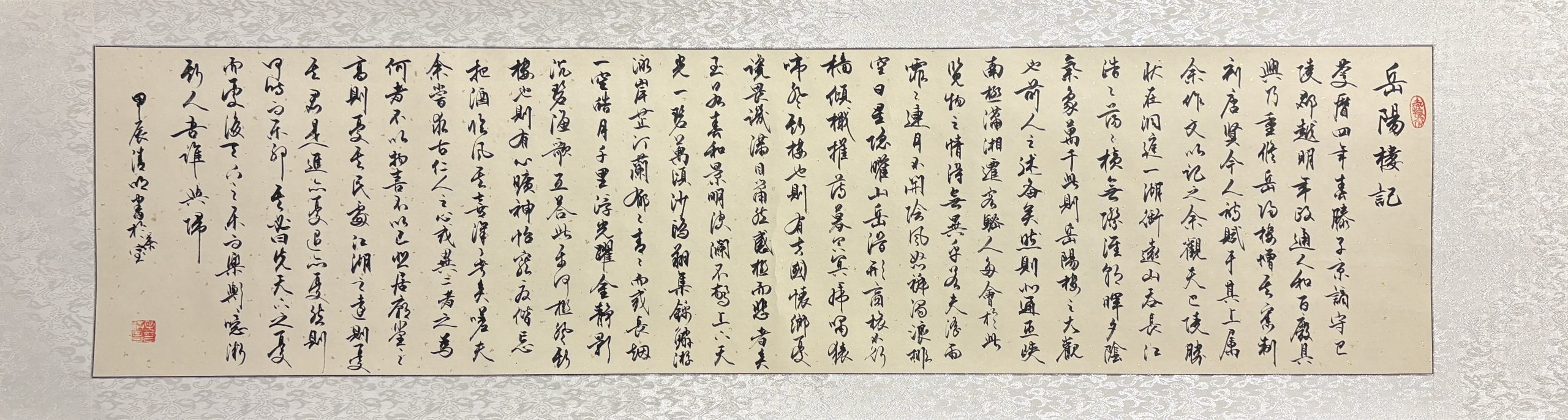
This calligraphy piece features the complete text of “Memorial to Yueyang Tower” (Yueyang Lou Ji) and was handwritten by Raymond Mao on Qingming Day, April 4th,2024. The strokes are delicate and flowing, with an open and harmonious composition. The text is taken from the classic prose by Fan Zhongyan, in which he describes the vast scenery of Dongting Lake from Yueyang Tower and expresses deep reflections on life, fortune, and devotion to the nation. The work is renowned for its closing line —“Be the first to worry about the world’s troubles, and the last to enjoy its happiness.”
Created in Sydney, the piece subtly carries Raymond’s sentiment of homesickness during the Qingming season.
Executed in semi-cursive script (xíngkǎi), the work shows balanced structure and rhythmic variation — traditional in spirit yet graceful and alive. Suitable for display in a study, living room, tearoom, or cultural space, it holds both aesthetic appeal and collectible cultural value.



Reviews
There are no reviews yet.